
I was very pleased with our pest service today. We were having an issue with ants in a couple areas. With the treatment and stop back by Mike as well as some suggestions on sealing them out, so far so good.
Get Rid of Brown-Banded Cockroaches with Professional Pest Control
At Impact Pest Control, we specialize in identifying and eliminating cockroaches in and around your home. Give us a call today or fill out the form below for a fast and free assessment from a professional pest control technician.
Trusted by 6,000+ homeowners

Professional Brown-Banded Cockroach Control
Brown-banded cockroaches can hide in places most homeowners never think to check. Get professional brown-banded cockroach control to identify the infestation, locate hidden harborage areas, and target the roaches where they’re actually living. Contact Impact Pest Control today to schedule an inspection and take back your home.

Signs Brown-Banded Cockroaches Are Hiding In Your Home
Brown-banded cockroaches are nocturnal and tend to remain hidden during the day, which means the evidence they leave behind can be more useful than an occasional sighting.
Roaches On Ceilings Or Upper Walls
Finding small roaches above eye level is one of the strongest clues that you’re dealing with brown-banded cockroaches.
Activity Around Picture Frames
The space behind frames and wall decorations provides a protected hiding place.
Roaches Inside Furniture
Brown-banded cockroaches may hide beneath furniture, inside upholstered pieces, or in other protected areas.
Small Egg Cases In Hidden Locations
Females attach their egg cases to protected surfaces such as walls, ceilings, furniture, and other concealed objects rather than simply dropping them.
Droppings In Sheltered Areas
Small dark droppings around furniture, cabinets, closets, and other hiding places can indicate an established population.
Nighttime Activity
These roaches are most active after dark, making nighttime inspections especially useful when looking for live activity.
Identify and Get Rid of Roaches
Different cockroach species behave differently, which is why correct identification is critical for effective treatment.
All Roaches
Not what type of cockroach you're dealing with? Learn about general roach treatment plans for your home.
Learn more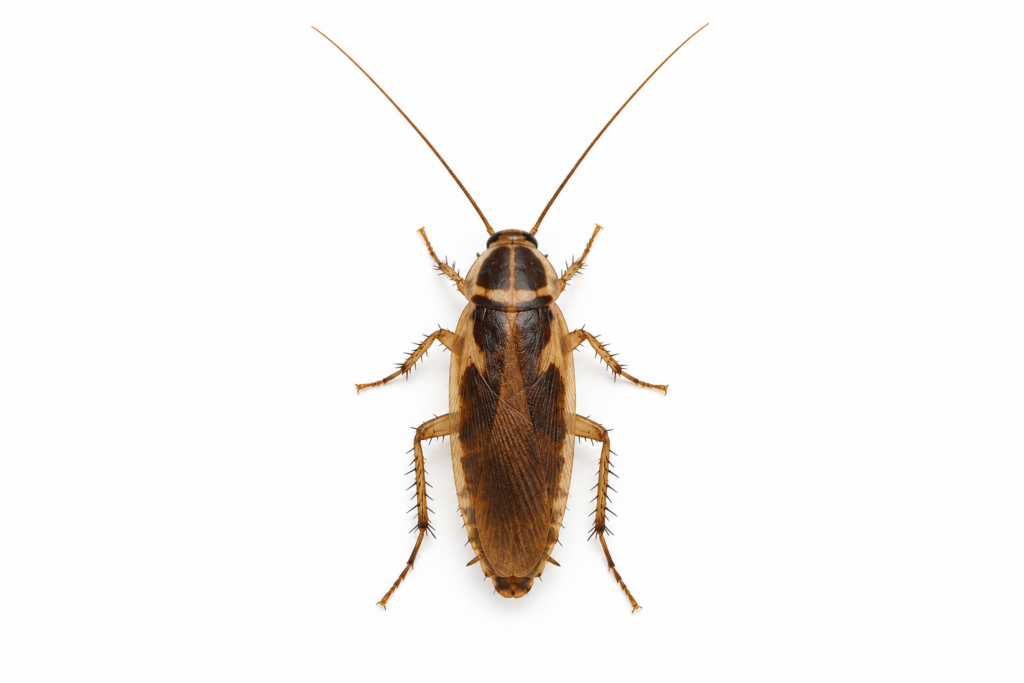
German Cockroaches
Light brown roaches with two dark stripes behind the head that multiply quickly and stay hidden deep in kitchens and wall voids.
Learn more
American Cockroaches
Large reddish-brown roaches often found in sewers, basements, and drains that can fly short distances and enter structures from the outside.
Learn more
Asian Cockroaches
Fast-flying roaches that closely resemble German cockroaches but are more likely to be found outdoors and attracted to light.
Learn more
Oriental Cockroaches
Dark-colored roaches that prefer cool, damp areas such as drains, crawl spaces, basements, and areas around the foundation.
Learn more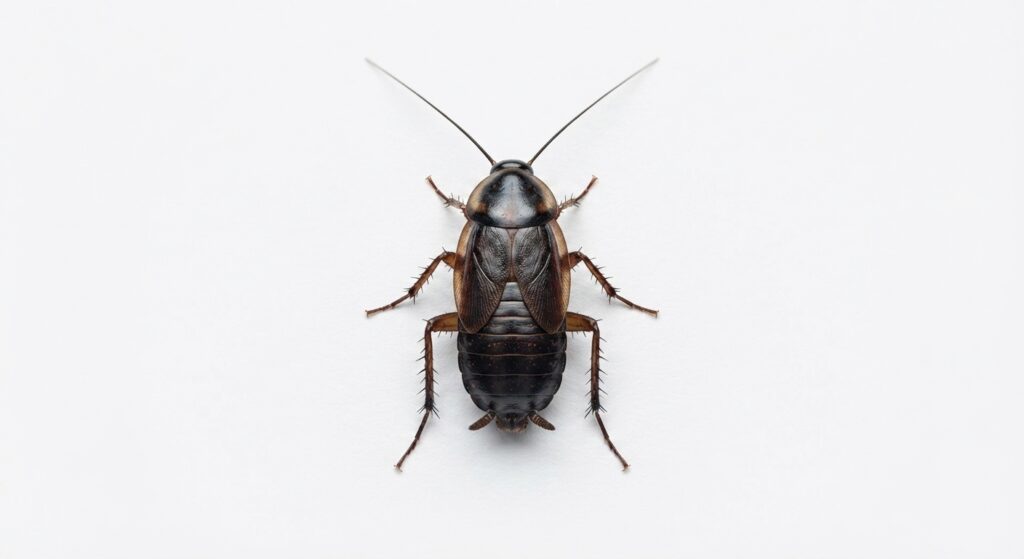
Smokybrown Roaches
Dark brown roaches that thrive in warm, humid outdoor areas and often enter homes from mulch, trees, attics, and other sheltered spaces.
Learn more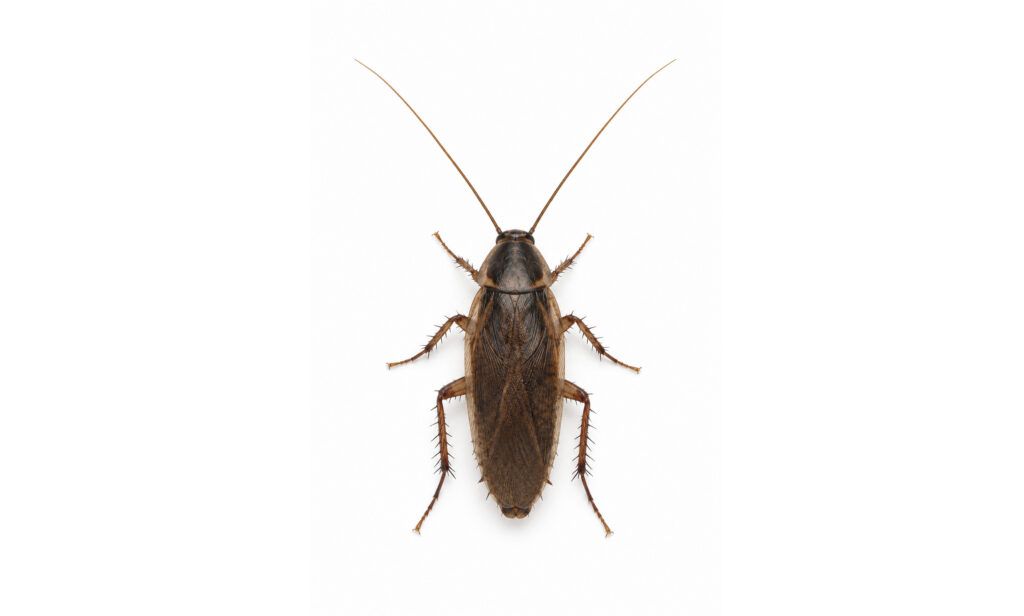
Brown-Banded vs. German Cockroaches
Brown-banded and German cockroaches are easy to confuse, but their behavior can provide an important clue. Correct identification is important because treatment strategies vary by species.
Start ServiceBrown-Banded Cockroach
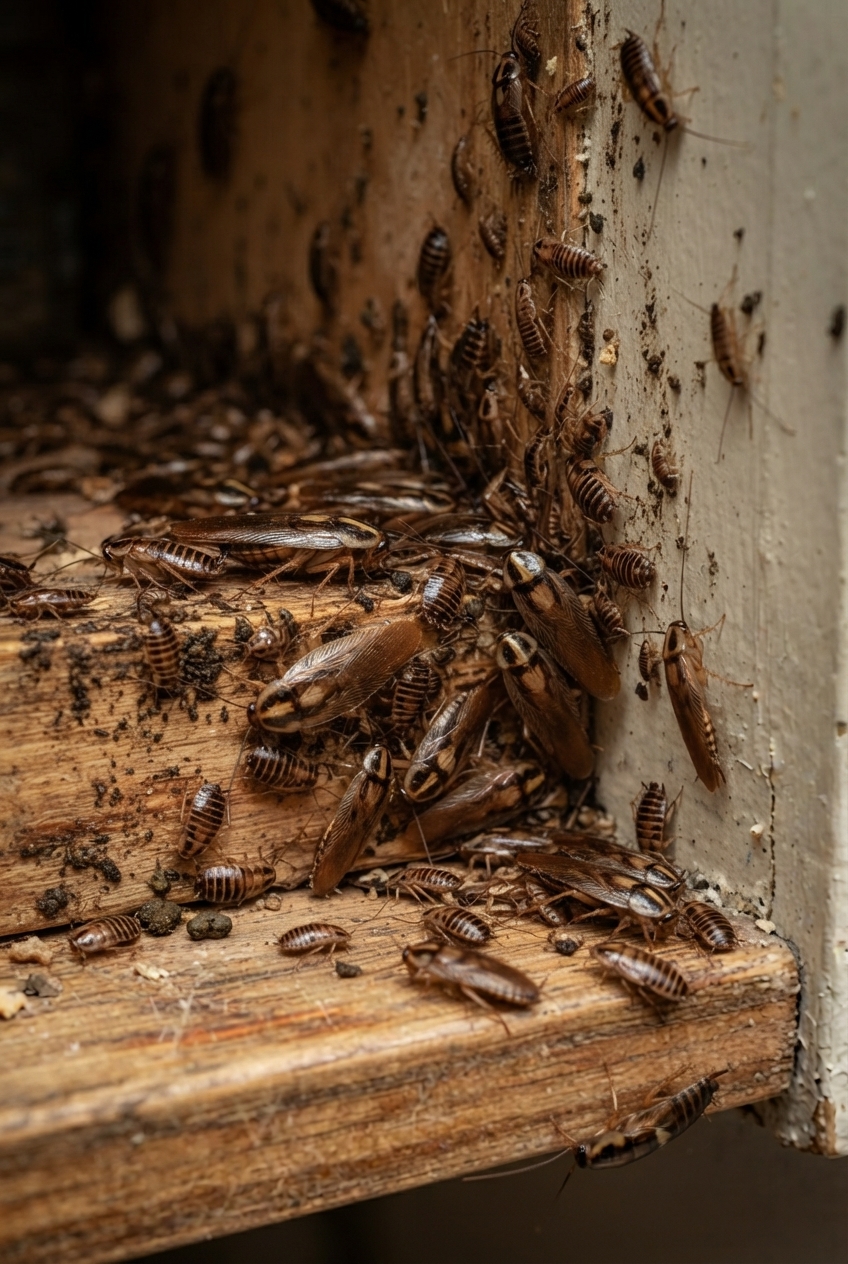
Brown-banded cockroaches are small, discreet, and unusually good at hiding in places most people don’t think to check. Unlike many roaches that gather around sinks, kitchens, and other damp areas, brown-banded cockroaches prefer warm, dry locations higher up in a building.
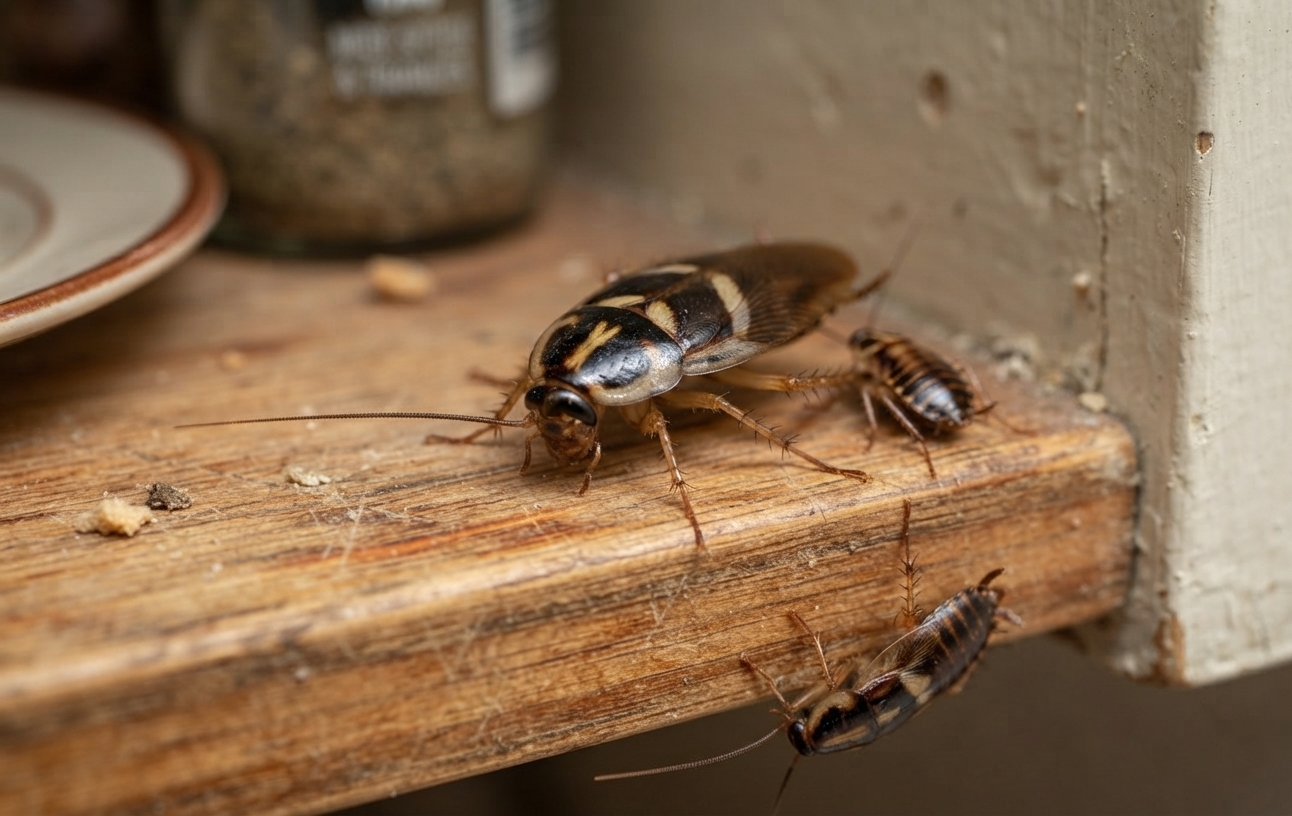
The brown-banded cockroach (Supella longipalpa) is roughly 1/2 inch long and ranges from light gold to dark brown. Adults and nymphs have distinctive light-colored bands running across the body, rather than the vertical stripes associated with German cockroaches.
Brown-banded cockroaches require less moisture than German cockroaches and commonly establish themselves in dry, elevated areas. That means a spotless kitchen does not necessarily mean your home is protected. A brown-banded infestation can be hiding in a bedroom, living room, or office area.
You may find them behind picture frames, inside furniture, around ceilings, in closets, near light switches, or tucked into the upper portions of cabinets. Because they can spread throughout a home rather than staying concentrated in one room, finding and treating their hiding places is critical.
German Cockroach
Primarily live indoors, especially in kitchens and other warm areas near food and water, and do not have the same strong flying behavior.
German cockroaches usually measure less than 1 inch long. They have a light brown color with two dark stripes behind their head and are the species most commonly associated with indoor infestations.
German roaches are strongly associated with warm, humid areas where food and water are readily available. Kitchens, bathrooms, appliances, and plumbing areas are common harborage locations.
Why Proper Identification Matters
Correct identification is important because treatment strategies vary by species.
Treating the wrong areas can leave the infestation largely untouched. Brown-banded cockroaches may be hiding far from the kitchen sink or bathroom, so inspection needs to extend throughout the structure rather than focusing only on traditional roach hotspots.
How to Get Rid of Brown-Banded Cockroaches with Professional Roach Control
Step 1: Inspect The Entire Structure
Effective brown-banded cockroach pest control requires finding the places these roaches actually use—not simply treating where homeowners happen to see them. We look beyond kitchens and bathrooms, checking ceilings, upper cabinets, closets, furniture, wall areas, appliances, picture frames, and other warm, protected locations. A technician inspects every area where cockroaches may be hiding. Looking beyond the places where roaches are seen helps uncover activity that may otherwise go unnoticed.
Start Service
Step 2: Apply Cockroach Gel To Targeted Areas
Professional gel bait can be placed in cracks, crevices, and other protected areas where brown-banded cockroaches travel and feed. Strategic placement helps target roaches in areas that sprays may not reach effectively.
Start Service
Step 3: Treat Interior Harborage Areas
Technicians apply targeted treatments around identified hiding places, entry points, and areas of active infestation. Interior applications are focused on the locations where evidence of brown-banded roaches is found rather than simply spraying every room.
Start Service
Step 4: Protect The Exterior And Reduce New Activity
Exterior treatments can target areas around the foundation, doors, windows, utility penetrations, and other potential entry points. Addressing outdoor activity and access points helps reduce the chance of additional cockroaches getting inside.
Start Service
Eliminate Brown-Banded Cockroaches and Keep Pests Out of Your Home
Why Brown-Banded Roaches Don’t Behave Like Other Roaches
Brown-banded cockroaches break many of the rules people associate with cockroach infestations. Unlike species that cluster around sinks, drains, and other damp areas, brown-banded roaches prefer warm, dry, elevated hiding spots throughout the home.
They may settle behind picture frames, inside furniture, around light fixtures, in upper cabinets, or near appliances and electronics. Their egg cases can also be attached to hidden surfaces, allowing the infestation to continue even when adult roaches are no longer easy to spot.
That behavior makes species-specific brown-banded cockroach control especially important. Treating only kitchens and bathrooms can leave much of the infestation untouched. A successful approach needs to account for where these roaches hide, how they spread, and where they are laying egg cases.
Why Brown-Banded Roaches Can Be So Difficult To Eliminate
They’re Not Always In The Kitchen
A common mistake is searching only around food and water. Brown-banded cockroaches can occupy bedrooms, living rooms, offices, closets, and other relatively dry parts of a home.
They Can Hide In Unexpected Places
Furniture, picture frames, electrical fixtures, upper cabinets, and other protected spaces can provide suitable harborage. Their ability to spread into these areas makes a quick spray around baseboards unlikely to address the entire infestation.
They Can Hitchhike Into Buildings
Brown-banded cockroaches can be transported in furniture, boxes, cartons, and other belongings. This is especially relevant when moving into a new home, buying used furniture, or bringing stored items indoors.
Egg Cases Can Be Hidden
A female can attach egg capsules to protected surfaces, making them difficult to find during a casual inspection. Each capsule can contain multiple eggs, allowing a hidden population to continue developing even after some adult roaches have been killed.
Keep Brown-Banded Cockroaches From Coming Back
Long-term prevention isn’t just about keeping the kitchen clean. It also means reducing the places where this unusual cockroach can hide.
Inspect Incoming Items
Check used furniture, boxes, appliances, and stored belongings before bringing them inside.
Reduce Clutter
Cardboard, paper, and stored materials can create additional hiding places.
Seal Cracks And Gaps
Close openings around walls, cabinets, trim, and other areas that provide concealed access.
Store Food Securely
Keep food in sealed containers and clean crumbs or spills promptly.
Monitor After Treatment
Sticky traps can help identify renewed activity before an infestation becomes widespread.
We have treatments for every home and every pest problem.
Start ServiceBrown-Banded Cockroach Control Frequently Asked Questions (FAQs)
Get your brown-banded roach pest control FAQs answered.
Start ServiceAre Brown-Banded Cockroaches Common In Texas?
Brown-banded cockroaches can be found in Texas, and their preference for warm, dry indoor environments makes them well suited to buildings where climate-controlled conditions remain stable. Texas A&M identifies them as an indoor cockroach that commonly occupies homes, apartments, hotels, and other structures.
Where Do Brown-Banded Cockroaches Hide?
They commonly hide in warm, dry locations such as ceilings, upper walls, closets, furniture, picture frames, light switches, and the upper portions of cabinets.
Are Brown-Banded Cockroaches Worse Than German Cockroaches?
Neither species is inherently “worse,” but brown-banded cockroaches can be particularly challenging because they may be distributed throughout dry areas of a building rather than concentrated around kitchens and plumbing. Their hiding locations make thorough inspection especially important.
Can Brown-Banded Cockroaches Live Without Water?
They require less moisture than German cockroaches and can thrive in relatively dry areas. This is one reason they may be found in bedrooms, offices, closets, and other areas away from obvious water sources.
Why Am I Seeing Brown-Banded Cockroaches In My Bedroom?
Bedrooms can provide exactly what brown-banded cockroaches prefer: warm, dry, protected hiding places. Check furniture, closets, picture frames, upper walls, and other undisturbed areas rather than assuming the infestation is centered in the kitchen.
Don't Let Brown-Banded Roaches Take Over Your Home
Impact Pest Control can identify the species, track down hidden harborage areas, and create a targeted treatment plan designed to eliminate the infestation—not just the roaches you happen to see. Schedule your brown-banded cockroach inspection today and get a plan to make your home roach-free.