
I was very pleased with our pest service today. We were having an issue with ants in a couple areas. With the treatment and stop back by Mike as well as some suggestions on sealing them out, so far so good.
How to Get Rid of Love Bugs
At Impact Pest Control, we help homeowners manage seasonal fly problems and understand when professional treatment makes sense. If you're seeing love bugs in or around your home, call Impact Pest Control today for a fast and free home assessment.
Trusted by 6,000+ homeowners

Love Bug Pest Control for Fast Relief and Lasting Protection
Don't let swarming insects take over your property. Impact Pest Control can identify the pest, determine what's attracting it, and recommend practical solutions for eliminating pests and keeping your home comfortable.

How To Get Rid Of Love Bugs
Love bugs are a familiar sight across the southern United States, especially during their seasonal swarms. These small black flies often appear by the hundreds around homes, roads, vehicles, and outdoor areas. While they can be frustrating, love bugs are more nuisance than threat.
Unlike cockroaches or ants, love bugs are difficult to control with traditional insecticides. They are highly mobile, and new adults can continually blow in from surrounding areas.
The most effective approach is to reduce the conditions that make your property attractive and limit their access to indoor spaces.
Use Screens And Keep Doors Closed
Repair damaged screens and avoid leaving doors open during peak activity.
Use Fans Around Outdoor Areas
Love bugs are weak fliers, so moving air can make patios, porches, and other outdoor spaces less attractive to swarms.
Remove Accumulated Plant Debris
Lovebug larvae feed on decomposing vegetation, so keeping excessive leaf litter, grass clippings, and other organic debris away from the home can reduce suitable breeding habitat.
Clean Outdoor Surfaces Regularly
Love bugs may collect on light-colored buildings and other warm surfaces, particularly during peak activity.
Why You Shouldn't Ignore A Love Bug Swarm
Love bugs aren't a dangerous pest, but large seasonal populations can create several practical problems.
Start ServiceVehicle Damage
Love bug remains can become difficult to remove when baked onto a hot vehicle, and prolonged residue can contribute to damage to the paint finish.
Blocked Radiators
Heavy accumulations around a vehicle’s grille can restrict airflow through the radiator, particularly after driving through dense swarms.
Visibility Problems
Large numbers of love bugs can quickly cover a windshield, making driving more difficult and creating a safety concern.
How Professional Love Bug Pest Control Works
Step 1: Identify Where Love Bugs are Concentrating
An Impact Pest Control technician can help you identify where love bugs are coming from and create a treatment plan to limit them from swarming around your property. The first step is identifying where love bugs are gathering around the property, including entry points, windows, doors, landscaping, and outdoor living areas.
Start Service
Step 2: Reduce Conditions That Support Activity
Excessive decaying vegetation, grass clippings, and other organic debris can provide habitat for developing larvae. Reducing these conditions can make the surrounding property less favorable.
Start Service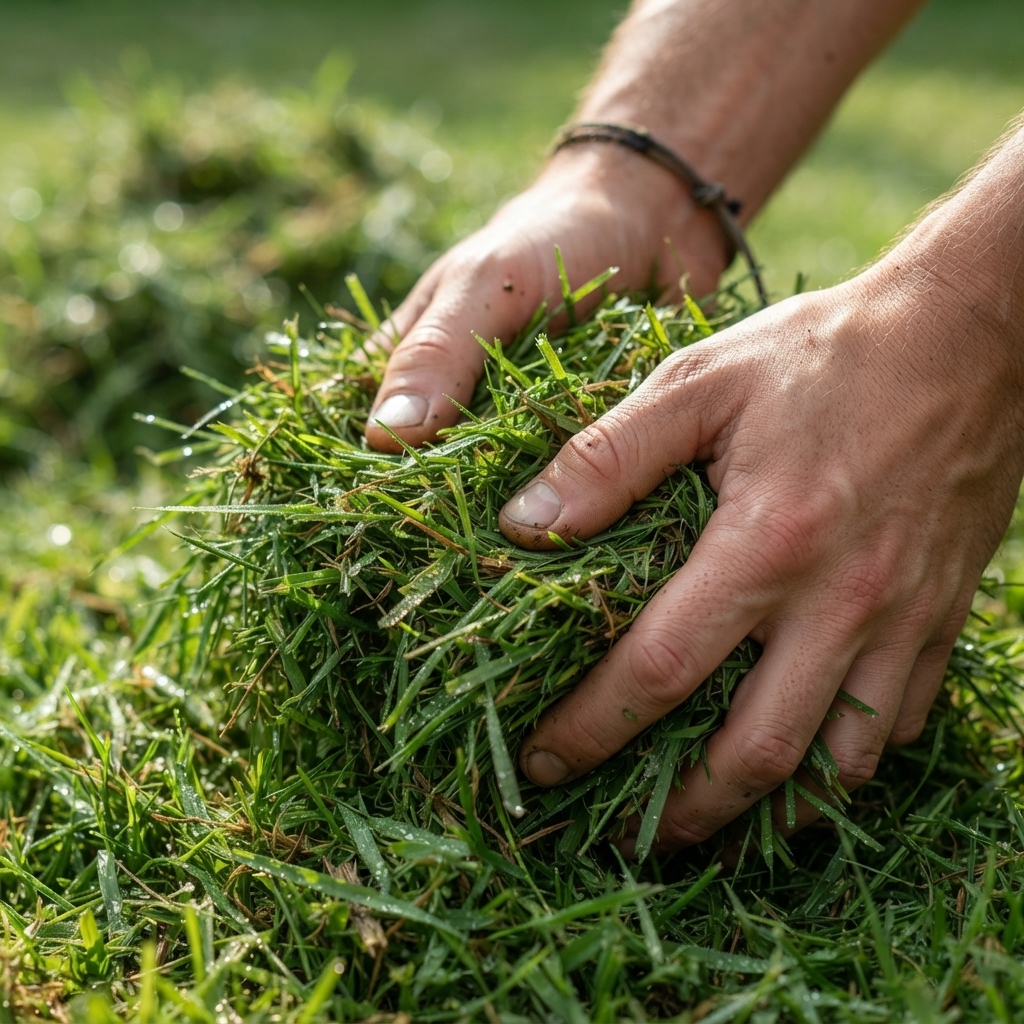
Step 3: Seal Common Entry Points
Repair damaged screens, seal gaps around doors and windows, and close other openings that allow swarming insects into the home.
Start Service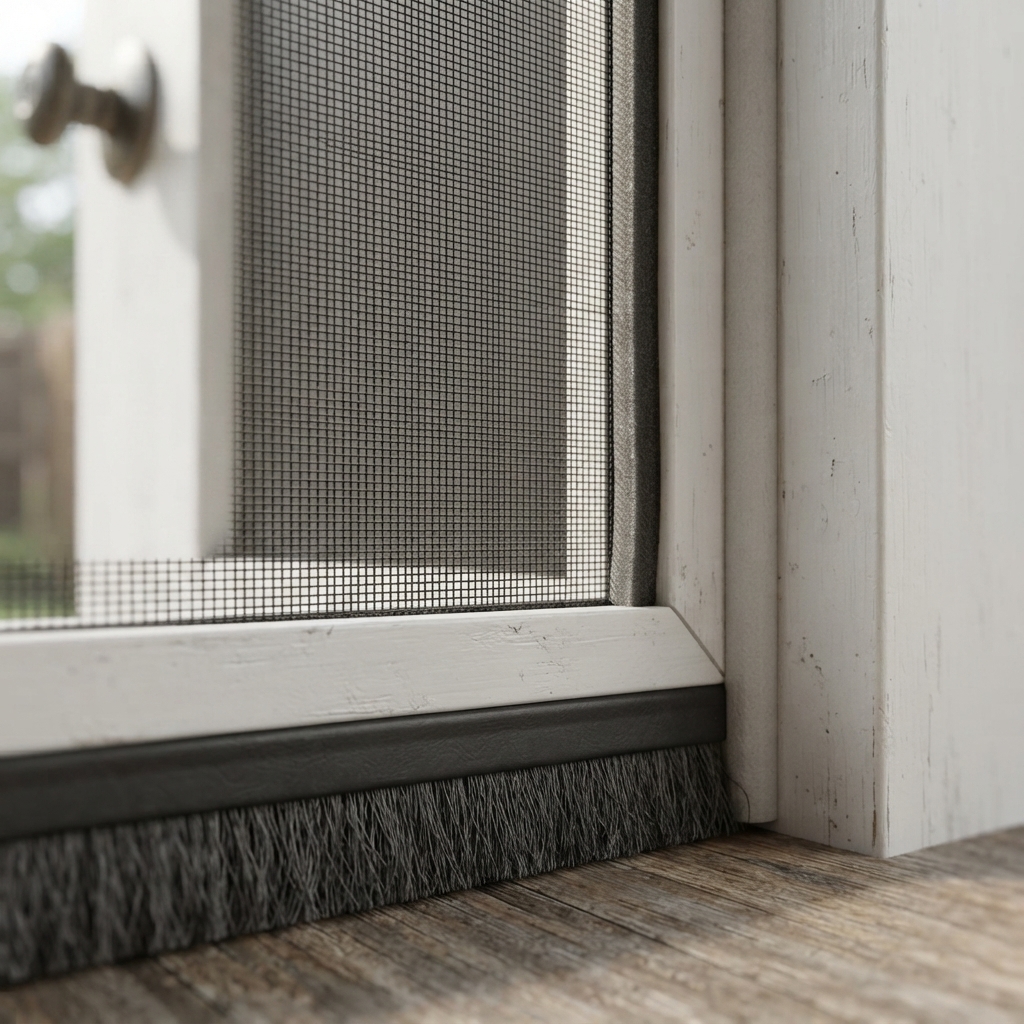
Step 4: Apply Targeted Exterior Spray Treatments
Where appropriate, we apply targeted insecticide treatments to exterior areas where love bugs gather, such as entryways, patios, and other high-activity zones. This can reduce nuisance activity and make outdoor areas more comfortable during peak season.
Start Service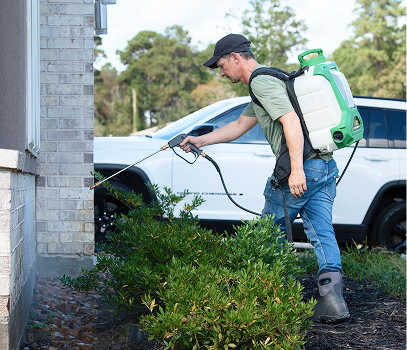
Keep Love Bugs From Taking Over Your Property
How to Identify Love Bugs
Love bugs are easy to recognize once you know what to look for.
Black Flies With Red Coloring
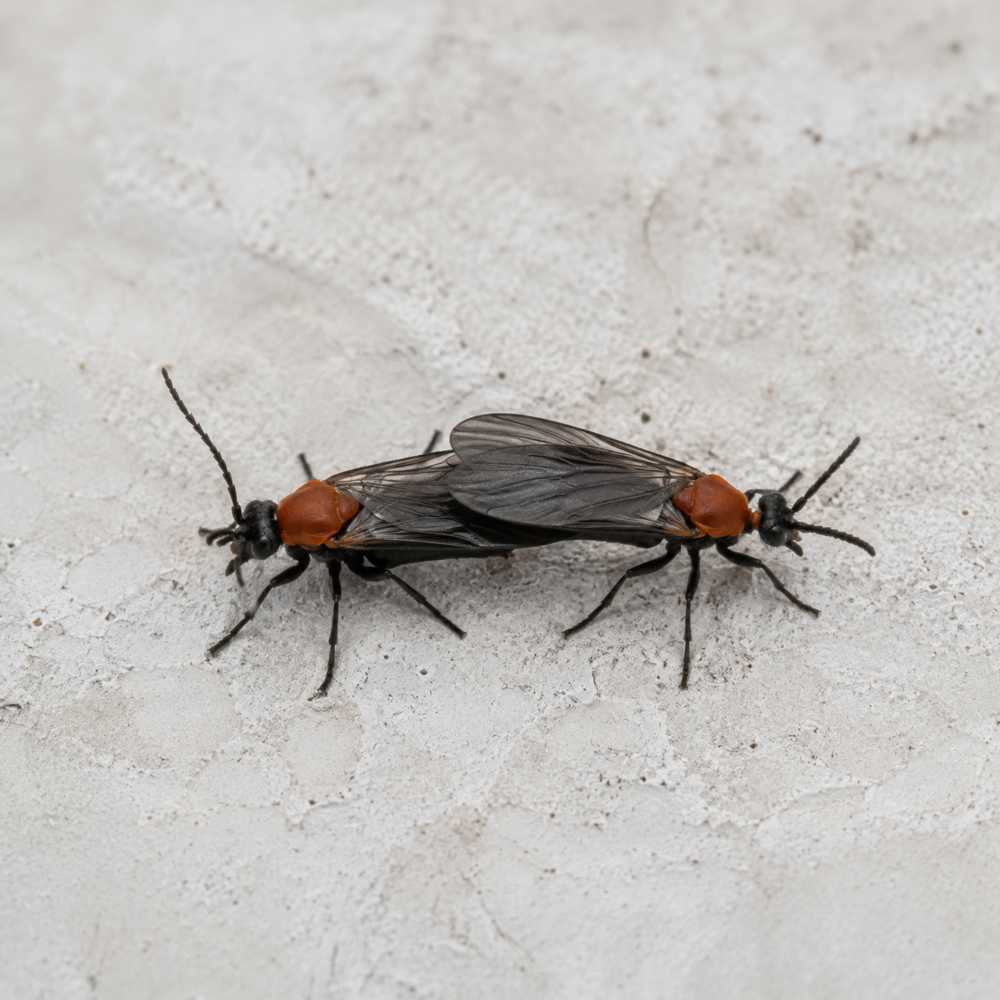
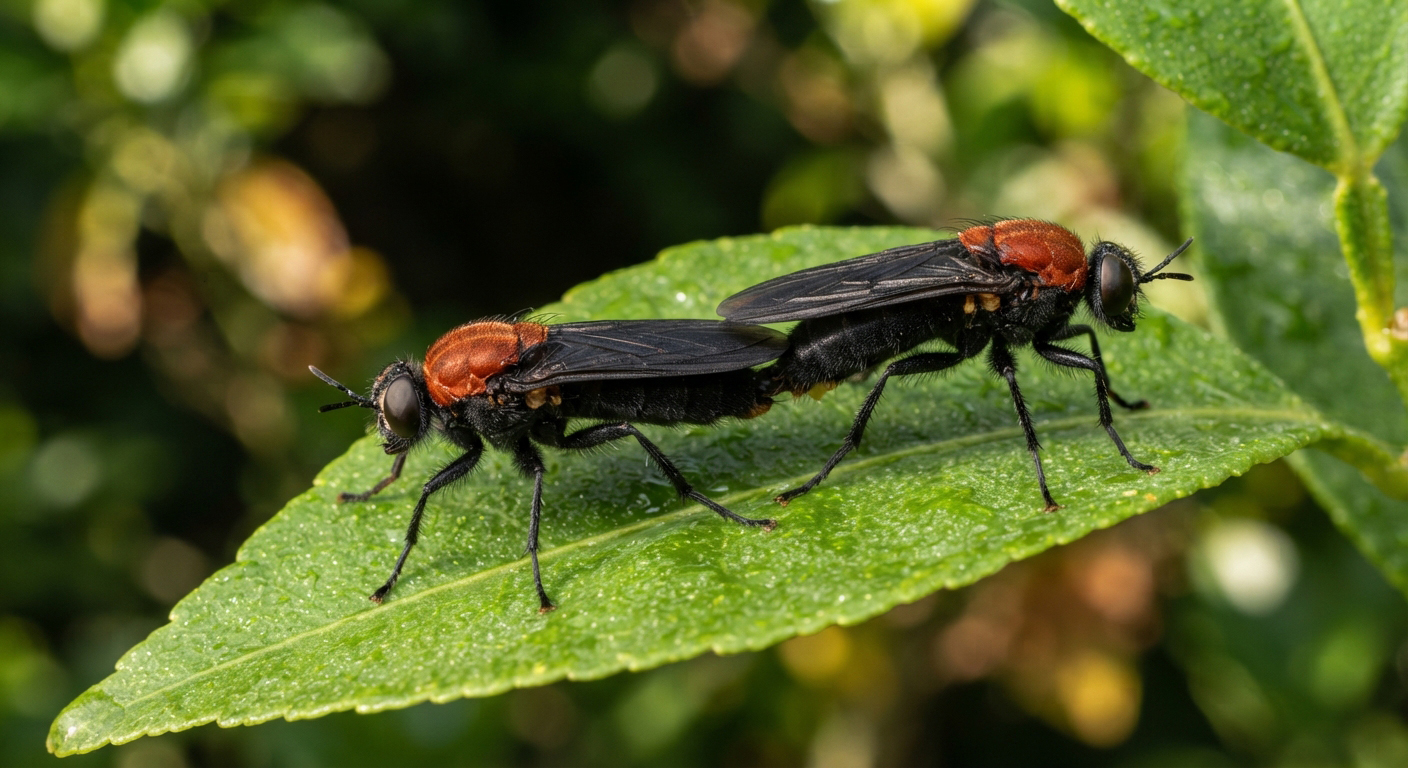
Adult love bugs have slender black bodies with a reddish-orange area behind the head.
Mating Pairs
The insects are frequently seen attached end-to-end because mating pairs remain connected for extended periods.
Large Outdoor Swarms
Hundreds or even thousands may gather around roads, lawns, buildings, and other warm, sunny areas during seasonal emergence.
Love Bugs On Your Car
Their attraction to warm surfaces and vehicle exhaust can result in heavy buildup on windshields, grilles, and front bumpers.
Love Bugs Around Windows And Doors
They may collect around light-colored surfaces and openings, particularly on the side of a building facing prevailing winds.
Dead Love Bugs On Outdoor Surfaces
Large numbers of dead adults around patios, sidewalks, windows, and vehicles can indicate that a nearby generation has recently emerged.
Get Rid of Love Bugs in and Around Your Home
You can’t completely eliminate love bugs from the surrounding environment, but you can make your home less inviting and reduce how many reach your living spaces.
Clean Up Leaf Litter
Remove excessive dead leaves, grass clippings, and decaying plant material near the house.
Maintain Window Screens
Patch holes and replace damaged screens that allow flying insects inside.
Use Outdoor Fans
Fans can help disrupt love bug flight around patios, porches, and other areas where people gather.
Keep Doors Closed
During peak daytime activity, minimizing open-door time can significantly reduce the number of insects that enter.
Wash Vehicles Promptly
If your vehicle passes through a heavy swarm, rinse and clean the front end as soon as practical rather than allowing the residue to sit in the sun.
We have treatments for every home and every pest problem.
Start ServiceFrequently Asked Questions About Fruit Flies
Start ServiceWhat Are Love Bugs?
Love bugs are small flies scientifically known as Plecia nearctica. Adults are mostly black with reddish coloring behind the head and are commonly seen in mating pairs. Their larvae live in soil and feed on decaying plant material, where they play a role in decomposition.
Why Are Love Bugs Stuck Together?
They’re stuck together because they’re mating. The male and female can remain attached for hours, and seeing pairs flying or resting together is one of the easiest ways to recognize love bugs.
Do Love Bugs Bite?
No. Love bugs do not bite or sting people, and they aren’t known to transmit disease. Their primary impact is the nuisance created by large seasonal swarms and the mess they leave on vehicles and buildings.
Where Do Love Bugs Come From?
Love bugs are native to the broader Gulf Coast region and are also established throughout much of the southeastern United States. They were not created by the University of Florida, despite a long-running myth. Historical records show their spread through the Gulf states before they became widespread in places like Texas and Florida.
When Is Love Bug Season?
In much of the Southeast, the two most noticeable periods are April through May and August through September. Each major flight can last several weeks, although timing varies with temperature, moisture, and local conditions.
Need Help With Seasonal Fly Problems?
Don't let swarming insects take over your property. Impact Pest Control can identify the pest, determine what's attracting it, and recommend practical solutions for keeping your home comfortable.